







Predictive Analytics in Retail:
From Guesswork to Accurate Demand Planning
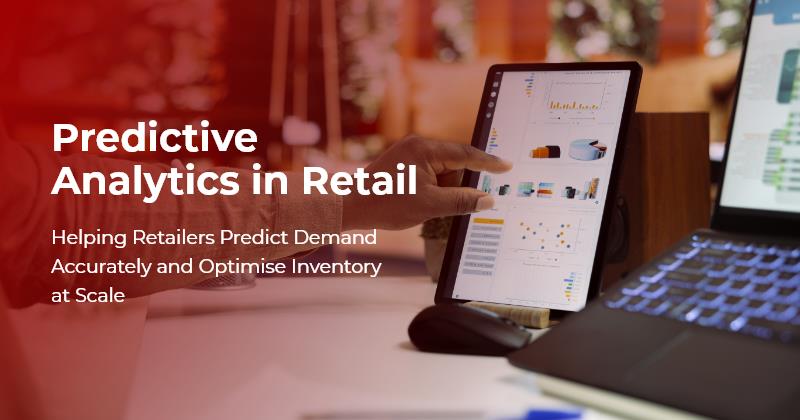
Retailers today operate with shorter product seasons and high capital exposure due to inventory. In this environment, manual forecasting and traditional reporting often delay decisions instead of enabling them. Predictive Analytics solves this gap by using behavioural data, demand signals and operational patterns to forecast outcomes before they affect stock and revenue.
When businesses use Predictive Analytics, they know what people will buy ahead of time. This helps teams stock the right products, avoid piling up unsold items, and replenish stores when demand starts rising. This gives retailers a better grasp of margins, cash flow and inventory flow.
Claritus Consulting simplifies the use of predictive insights by structuring data properly, applying forecasting models and presenting results in formats that teams can easily act on.
Why Retailers Need Predictive Analytics Right Now
Retail execution has changed fundamentally because of:
- Location-specific buying behaviours.
- Shorter life cycles in apparel, beauty and lifestyle categories.
- Bulk ordering pressure from suppliers.
- Limited visibility into forward demand.
Predictive Analytics allows businesses to model future buying trends instead of reacting once the results appear in sales reports.
What matters today is continuous forecasting, where insights flow into procurement, allocation and financial planning.
Claritus enables this through cloud-native environments that refresh demand models as transactions occur.
What Predictive Analytics Means for Retail Planning
Earlier, forecasting was based on last season’s sales and simple arithmetic projections. Predictive Analytics expands planning by analysing correlations between:
- Store traffic and consumption.
- Seasonal events and buying intent.
- Promotional lift and discount duration.
- Supply-side lead-time patterns.
- Regional adoption patterns.
- SKU lifecycle stages.
- Pricing shifts vs. drop-off rates.
This helps businesses generate demand curves at different levels:
- Product group
- Category
- Store cluster
- Region
- Channel
Claritus deploys these predictive-modelling engines into live environments, allowing planners to simulate demand scenarios before placing purchase orders.
In execution terms, this is the difference between reacting to demand vs preparing for it.
How Predictive Analytics Reshapes Retail Decisions
1. Smarter Demand Forecasting and Allocation Strategy
With Predictive Analytics, differences between stores are no longer guessed. Retailers understand which store will outperform during seasonal peaks, which cluster will require safety inventory, and which products will need replenishment earlier.
Outcomes include:
- Higher first-cycle fulfilment.
- Increased sell-through.
- Reduced strain on central warehouse stock.
Claritus links these predictions with ordering workflows, BI dashboards and vendor triggers so allocation decisions flow automatically.
2. Inventory Optimisation Based on Consumption Probability
Predictive Analytics improves inventory precision by mapping stock movement probability across time windows. This reveals:
- Which SKUs will slow down.
- Which SKUs will over-rotate.
- Which SKUs must be replenished to avoid depletion.
- Which regions contribute majority movement.
This level of visibility safeguards working capital.
3. Data-Driven Pricing Recommendations
Pricing is no longer a flat discounting exercise. Predictive Analytics correlates price positioning with movement velocity. Merchandisers gain a view of:
- Price thresholds where demand increases.
- Optimal markdown timing.
- Expected margin impact.
- Elasticity by region or channel.
4. Understanding Customer Behaviour Patterns
Predictive Analytics reveals patterns hidden within consumption behaviour.
Examples include:
- Probability that a customer will repeat purchase within a timeline.
- Cluster-wise affinity for product types or colours.
- Cart abandonment likelihood based on total basket amount.
- Purchase frequency modelling.
5. Market Trend Recognition Before Sales Data Shows It
Retail performance is becoming anticipatory.
Predictive Analytics detects early signals like:
- Spike in category search.
- Shift in product variant preference.
- Decline in interest for a seasonal SKU.
- Increasing cross-product combination frequency.
This helps retailers plan launches based on consumption momentum, not assumptions.
The Real Operational Barrier: Systems Are Not Connected
Common root causes include:
- Transactional data sits in disconnected sources.
- Warehouse operations work in isolation.
- Merchandise teams manually project numbers.
- Suppliers operate on fixed ordering cycles.
Predictive Analytics is effective only when underlying data moves into unified workflow.
Claritus addresses this through:
- Data pipeline standardisation.
- Cloud-based storage and aggregation.
- Predictive modelling layer.
- Dashboard visualisation.
- Integration into ERP cycles.
This enables predictive intelligence to run continuously.
The Future of the Retail Industry with Predictive Analytics
The retailers who adopt Predictive Analytics early will shape this future and outperform competitors with better margins, smarter decisions and stronger customer loyalty.
A financially stronger retail model
Predictive Analytics will enable retailers to plan inventory based on future demand, not estimates. This means:
- Lower dependence on end-of-season markdowns.
- Higher sell-through at regular pricing.
- Inventory that moves frequently instead of sitting idle.
- Over time, this leads to healthier cash cycles and faster return-on-stock investment.
A more responsive operational structure
Predictive decision-making transforms daily execution. Retailers will operate faster and more confidently because demand planning is rooted in actual signals. This results in:
- Faster procurement timing.
- Better warehouse utilisation.
- Smoother replenishment cycles with fewer emergency orders.
- Operating teams gain clearer direction instead of reacting to shortages or excess stock.
A better-quality experience for customers
Retailers will be able to match demand in real time and ensure availability when customers want it. This shapes a customer experience defined by:
- Products being available without stock-outs.
- Timely fulfilment across online and store formats.
- More relevant choices aligned with buyer preferences.
- When demand is predicted instead of guessed, the customer journey becomes smoother and more satisfying.
Claritus Consulting helps Retailers Operationalise Predictive Analytics
Start Converting Accuracy into Measurable Advantage with Claritus